Learning how to play Wingo takes about ten minutes, and doing it in the right order saves a lot of money. This walkthrough goes from a blank screen to a settled round: what each part of the board means, how to place a bet without accidentally staking ten times what you intended, how settlement is calculated, and what to check afterwards. We start on a free demo, because that is genuinely where a beginner should start.

How to Play Wingo: Step-by-Step Guide for Beginners
Before You Start
Three things are worth settling before you place anything:
- Check the legal position where you live. Online real-money gaming is restricted or prohibited in several Indian states. Our color prediction game guide covers this in more detail.
- Decide your loss limit now. A specific number, decided while you are calm, before the first round. Not a target to renegotiate later.
- Practise free first. The demo on this site runs the same board with play money. Every mistake described below is one you want to make there rather than with real money.
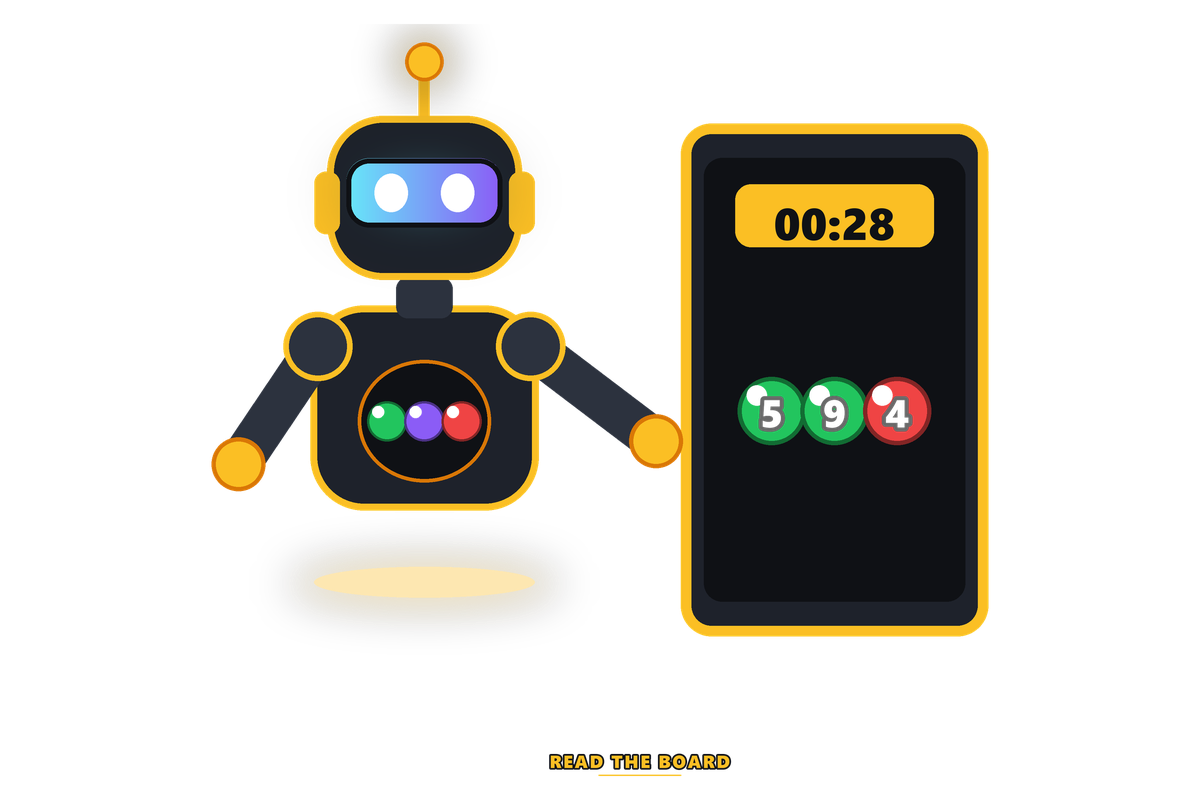
Reading the Board
Every Wingo interface contains the same six elements, whatever the app is called:
| Element | Usually found | What it tells you |
|---|---|---|
| Period number | Top of the board | The unique ID of this round — quote it in any dispute |
| Countdown timer | Top right | Time left to bet. Betting locks in the final seconds |
| Balance | Top right | Withdrawable funds. Bonus credit is tracked separately |
| Colour buttons | Centre | Green, Violet and Red markets |
| Number balls 0–9 | Below the colours | Exact-digit bets paying 9× |
| Result history | Above or below the board | Past results only — no forecasting value |
If you can find those six things, you can play any app in this category. The layouts vary cosmetically; the structure does not.
Placing Your First Bet, Step by Step
- Pick a slow table. Choose the 3-minute or 5-minute option rather than 1-minute or 30-second. You want time to think while you are learning, and far fewer rounds per hour means far less exposure.
- Check the timer. If fewer than about ten seconds remain, wait for the next round. Rushing is how mistakes happen.
- Select the smallest chip. Usually ₹1 or ₹10.
- Check the multiplier. Confirm it reads x1. This is the single most important step on the page — see below.
- Choose one market. Green or Red is the easiest starting point. Not three markets at once; you want to be able to follow what happened.
- Confirm. The stake is deducted immediately and a badge appears showing what you have on that market.
- Wait for the lock and the draw. The board freezes for the last few seconds, then reveals a digit from 0 to 9.
- Check the settlement against the payout table below, and open your order history to confirm it matches.
The Multiplier Trap
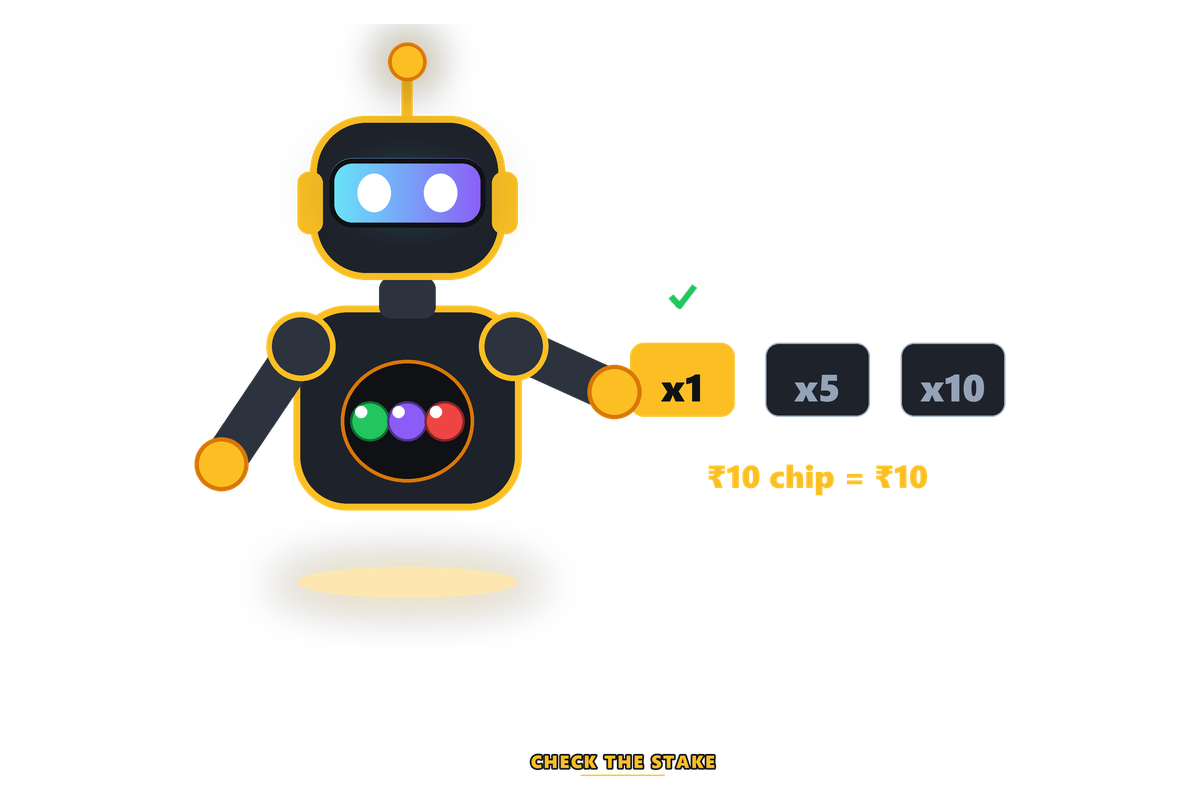
If you remember one warning from this page, make it this one. Next to the chip selector sits a multiplier control showing x1, x5, x10 and sometimes higher. It multiplies your chip value.
| Chip | Multiplier | Actual stake |
|---|---|---|
| ₹10 | x1 | ₹10 |
| ₹10 | x5 | ₹50 |
| ₹10 | x10 | ₹100 |
| ₹100 | x10 | ₹1,000 |
| ₹1,000 | x10 | ₹10,000 |
On a phone screen the multiplier buttons sit close to the chips and are genuinely easy to hit while scrolling. A player who believes they are betting ₹10 a round and is actually betting ₹100 will burn through a balance ten times faster than expected, and will usually blame the game rather than the interface. Check the badge on the button before every confirmation until the habit sticks.
How Settlement Works
One digit settles everything. Here is a worked example — assume you placed ₹100 on Green and ₹100 on Big in the same round:
| Digit drawn | Green ₹100 returns | Big ₹100 returns | Round total |
|---|---|---|---|
| 7 (Green, Big) | ₹200 | ₹200 | ₹400 — both won |
| 9 (Green, Big) | ₹200 | ₹200 | ₹400 — both won |
| 1 (Green, Small) | ₹200 | ₹0 | ₹200 — break even |
| 5 (Green+Violet, Big) | ₹150 | ₹200 | ₹350 — green reduced |
| 6 (Red, Big) | ₹0 | ₹200 | ₹200 — break even |
| 2 (Red, Small) | ₹0 | ₹0 | ₹0 — both lost |
Note the digit 5 row. Green paid ₹150 rather than ₹200 because 5 is a mixed digit carrying violet, and the plain colour bet is reduced to 1.5× when that happens. The full explanation is on the Wingo color prediction page. If a settlement ever looks wrong, check whether a 0 or a 5 was drawn before assuming an error.
Do all of this with play money first
The free demo runs the same board, the same timer and the same payout ratios on ₹1,000 of play money. Make every beginner mistake there — including the multiplier one — where it costs nothing.
A Sensible First Session Plan
If you do move to real money after practising, this is a structure that keeps a first session from becoming an expensive lesson:
- Set a hard loss limit — an amount you would be genuinely unbothered to lose entirely.
- Set a time limit too, and put an alarm on your phone. Round timers are designed to make an hour disappear.
- Bet flat. The same stake every round, regardless of what happened last round. No doubling, no recovery bets.
- Stay on the slow table for the whole first session.
- Stop at the limit. Whether you are up or down. This is the part people skip, and it is the part that matters.
- Skip the bonus unless you have read the wagering requirement in full. See deposit and withdrawal.
Mistakes to Avoid
- Starting on the 30-second table. Twice the rounds, twice the exposure, while you are still learning.
- Betting after a streak. Colours are never "due". See Wingo prediction.
- Doubling to recover. Eight losses from ₹100 needs ₹25,500 already staked to continue.
- Leaving the multiplier on x10. Covered above, and worth checking twice.
- Paying for signals. A guaranteed loss stacked on top of a probable one.
- Playing on an unstable connection. A dropped signal does not cancel a placed bet.
- Installing a modified APK. These target your credentials, not the operator's server.
A Worked First Session, Round by Round
Reading rules is one thing; watching them play out is another. Here is a realistic twenty-round session at a flat ₹100 on Green, to show what an ordinary run actually looks like — including the parts that feel like something is wrong when nothing is.
| Rounds | Digits drawn | Outcome | Balance after |
|---|---|---|---|
| 1–5 | 3, 8, 1, 6, 2 | Won 2, lost 3 | ₹1,900 |
| 6–10 | 4, 5, 9, 2, 6 | Won 1 full, 1 reduced (the 5), lost 3 | ₹1,750 |
| 11–15 | 7, 1, 4, 8, 3 | Won 3, lost 2 | ₹1,850 |
| 16–20 | 6, 2, 0, 8, 9 | Won 1, lost 4 | ₹1,550 |
| Total | — | 8 wins from 20 | −₹450 on ₹2,000 staked |
Three things in that table are worth pausing on, because each one causes confusion for new players.
Round 10 paid ₹150, not ₹200. A 5 was drawn — a mixed digit carrying violet — so the plain green bet settled at the reduced 1.5× rate. Nothing went wrong.
Rounds 16 to 20 lost four times out of five. This feels like the game turning against you, and it is simply an ordinary run. Green covers roughly half the digits, and four losses in five rounds happens regularly. This is the exact moment where people double their stake, and it is the exact moment they should not.
Eight wins from twenty and still down ₹450. That surprises people most. Winning 40% of rounds at 2× is a losing pattern, and the reduced rate on the mixed digit made it slightly worse. There was no mistake in the play — the arithmetic simply works out this way.
Run the same twenty rounds on the play-money demo and you will get a different sequence with a similar shape. That is the lesson worth taking away.
Pacing, and Why the Clock Matters More Than the Stake
Most beginner advice focuses on bet size. Pace matters at least as much, and gets far less attention.
A ₹100 stake sounds modest, and on a five-minute table it is — twelve rounds an hour, ₹1,200 through the game. The same ₹100 on the 30-second table is 120 rounds an hour and ₹12,000 through the game. Identical bet, ten times the exposure, because the house edge applies to volume rather than to the size of any single wager.
- You do not have to bet every round. Sitting out is a legitimate move, and on a fast table it is often the best one.
- The countdown creates artificial urgency. It is designed to. Missing a round costs you nothing at all.
- Auto-bet removes the only natural pause. Leave it off, especially while learning.
- Set an alarm, not an intention. Round timers make an hour disappear more effectively than almost any other interface.
If you take one habit from this page, make it starting on the slowest table available. The rules are identical, the payouts are identical, and your exposure is a fraction of what it would be elsewhere.
Play Safely — A Quick Reminder
Prediction games are games of chance. No pattern, chart, formula or paid signal can tell you the next result, and anyone promising a sure win is not being honest with you. Treat any money you put in as money you can afford to lose, set a time and spend limit before you start, and stop for the day once you reach it.
If play stops feeling like fun, take a break. Our guide to limits and warning signs covers spending limits, self-exclusion steps and support helplines available in India. You must be 18 or older, and online real-money gaming is restricted or banned in several Indian states — check your local rules first.
A Pre-Round Checklist
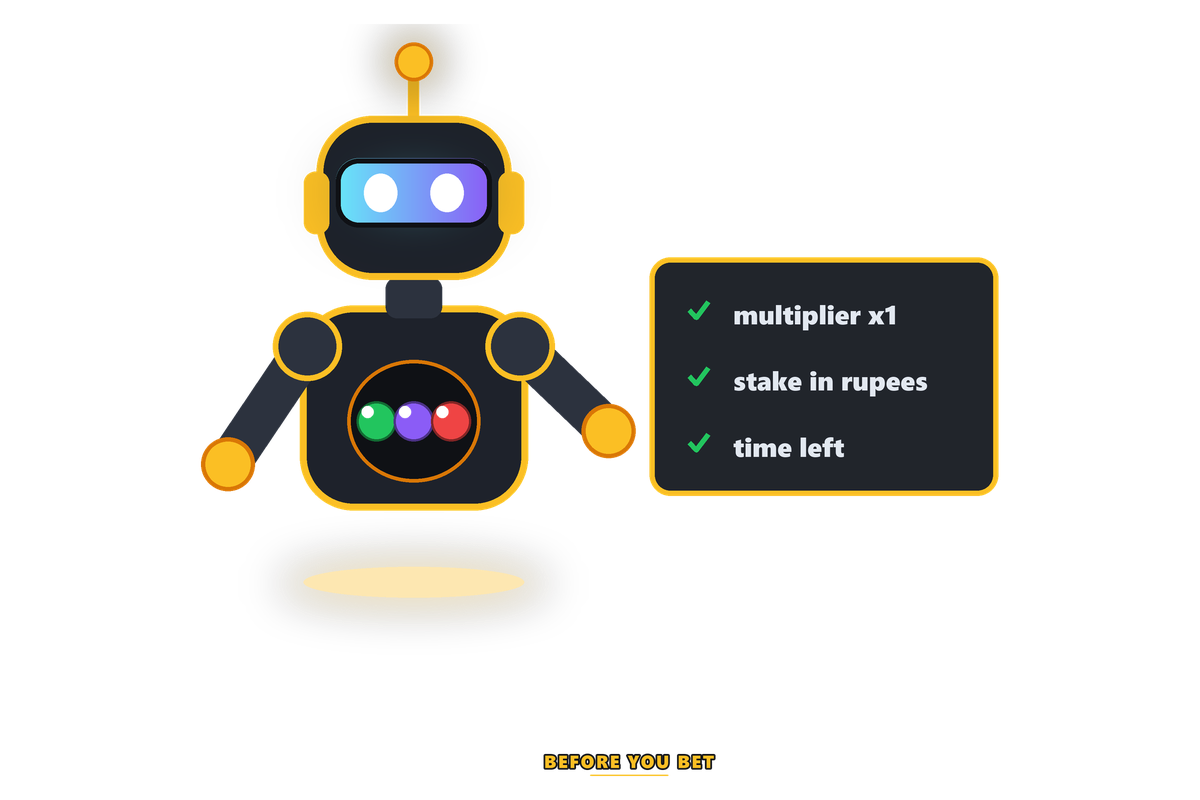
Five seconds before you confirm any bet, run through this. It prevents essentially every avoidable error described on this page:
- What is the multiplier? Confirm x1 unless you deliberately intend otherwise.
- What is the actual rupee stake? Read the number on the button, not the chip you selected.
- How much time is left? Under ten seconds, wait for the next round.
- Which market am I actually on? Green and violet sit adjacent on most layouts.
- What is my running total this session? Not the balance — the total staked.
- Am I placing this to recover a loss? If yes, stop. That is the one answer that should end the session immediately.
The last question is the important one. Everything else on this checklist prevents a small mistake. That one prevents the large one, and it is the only item that requires honesty rather than attention.
After Your First Session
Whatever the result, spend two minutes reviewing rather than immediately starting again.
- Check the order history, not the balance. The balance tells you where you ended; the history tells you how much went through the game. The second number is usually the surprising one.
- Count the rounds. Multiply by your stake. Compare that to what you thought you had spent.
- Note whether you kept to your limit. Not whether you won — whether you stopped where you said you would. That is the only part you control.
- Ignore the outcome as evidence. One session tells you nothing about whether an approach works. A winning first session is the most common reason people increase stakes, and it is pure variance.
- Do not deposit again the same day. The second deposit in a session is almost always chasing.
If you kept to your limit and stopped on time, the session went well regardless of the number. That is genuinely the standard worth using, and the responsible gaming page explains why.
Independent Sources
- BeGambleAware — advice and a free self-assessment tool.
- Expected value — the maths behind why flat betting beats progressive staking.
- Gambling Therapy — free international support if play stops being fun.
Frequently Asked Questions
How do I play Wingo as a complete beginner?
Start on a free play-money demo, choose a 3 or 5 minute table, select the smallest chip, confirm the multiplier reads x1, place a single bet on green or red, wait for the draw, then check the settlement against the payout table. Only move to real money once that whole loop feels routine.
What is the stake multiplier and why does it matter?
It multiplies your chip value. A ₹10 chip at x10 stakes ₹100, not ₹10. The multiplier buttons sit close to the chip selector and are easy to press by accident on a phone, so check the stake shown on the button before confirming every bet.
Which Wingo table should a beginner choose?
The 3-minute or 5-minute table. The rules and payouts are identical to the faster tables, but far fewer rounds per hour means much lower total exposure while you are still learning.
Why did my winning colour bet pay less than 2×?
A 0 or a 5 was drawn. Those are mixed digits carrying violet as well as a colour, and on those results the plain colour bet is reduced to 1.5× while violet pays its full 4.5×.
Do I need to deposit money to learn how to play Wingo?
No. The demo on this site is free, uses play money with simulated results, and needs only a nickname — no phone number, email or payment details. It is the recommended starting point.
Related Guides
- Wingo Game GuideFull rules, all markets and the real house edge.
- Free Wingo DemoPractise every step above with play money.
- Wingo Color PredictionWhy 0 and 5 pay a reduced colour rate.
- Wingo PredictionWhy streaks and charts do not forecast anything.
- Tiranga Game RegisterRegistration steps and what to check before signing up.
- Deposit and WithdrawalUPI payments, bonuses and withdrawal delays.
Conclusion
Playing Wingo is mechanically simple: read the board, check the multiplier, place one bet, wait for the digit, check the settlement. The skill — such as it is — lies entirely in the decisions around the game rather than inside it: which table, how much, how long, and when to stop.
Work through this guide once on the free demo and the whole loop will feel obvious within about ten rounds. Then read the payout table properly, so you always know exactly what you have bought. That combination — practice plus understanding the odds — is what Tiranga Game recommends to every beginner, and it costs nothing to do.