The phrase Tiranga Game lottery covers several different things, and confusing them is expensive. There are the instant lottery-style tables that sit alongside Wingo inside prediction apps — 5D, K3 and hash-based draws — and there are genuine state-run lotteries, which are regulated entirely differently. This page separates them, sets out the real odds for each format, and explains where the risk actually concentrates.
Tiranga Game Lottery: Formats, Odds and How It Differs From Wingo
What the Term Actually Covers
People searching for a lottery within these platforms usually mean one of three things:
- Instant in-app draws. Fast, continuous tables — 5D, K3, hash-based games — sitting in the same lobby as Wingo. Rounds resolve in minutes.
- Wingo itself. Many apps label their colour prediction game as a lottery, which is marketing rather than a different format. If that is what you are after, the Wingo game guide is the right page.
- Government state lotteries. Kerala, Nagaland, Sikkim, Punjab and West Bengal among others run legally authorised paper and online lotteries. These are a genuinely different thing, covered near the end of this page.
The distinction matters most for recourse. A state lottery is licensed, audited and has a public body behind it. An in-app instant draw run by an anonymous operator has none of that.
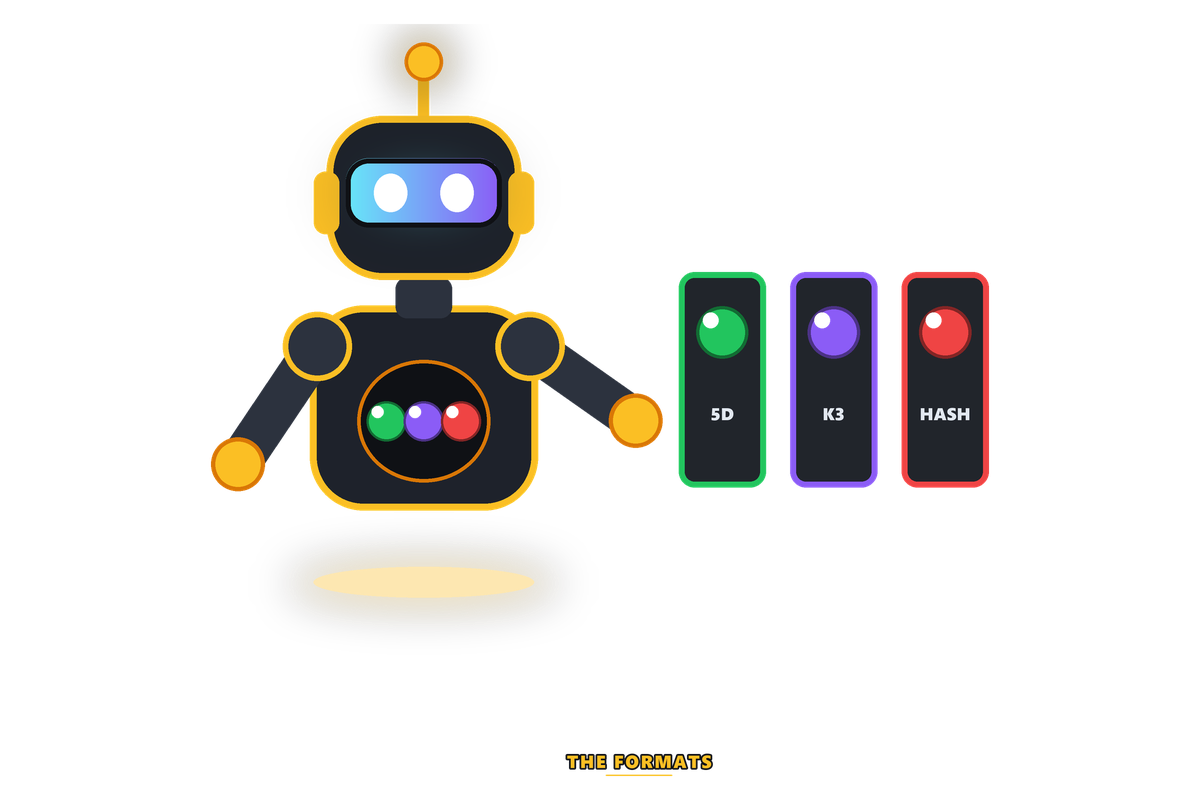
Tiranga Game Lottery Formats
| Format | Draw mechanic | Round length | Complexity |
|---|---|---|---|
| Wingo | One digit, 0–9 | 30 sec – 5 min | Lowest |
| 5D | Five digits drawn together | 1 – 5 min | Medium |
| K3 | Three dice, 1–6 each | 1 – 5 min | Medium |
| Trx / hash | Digit from a blockchain hash | 1 min | Low, but verifiable |
All four share the same underlying economics: fixed payouts set below true odds, fast rounds, and a margin that accrues to the operator over volume. The complexity differs; the structure does not.
5D Lottery Explained
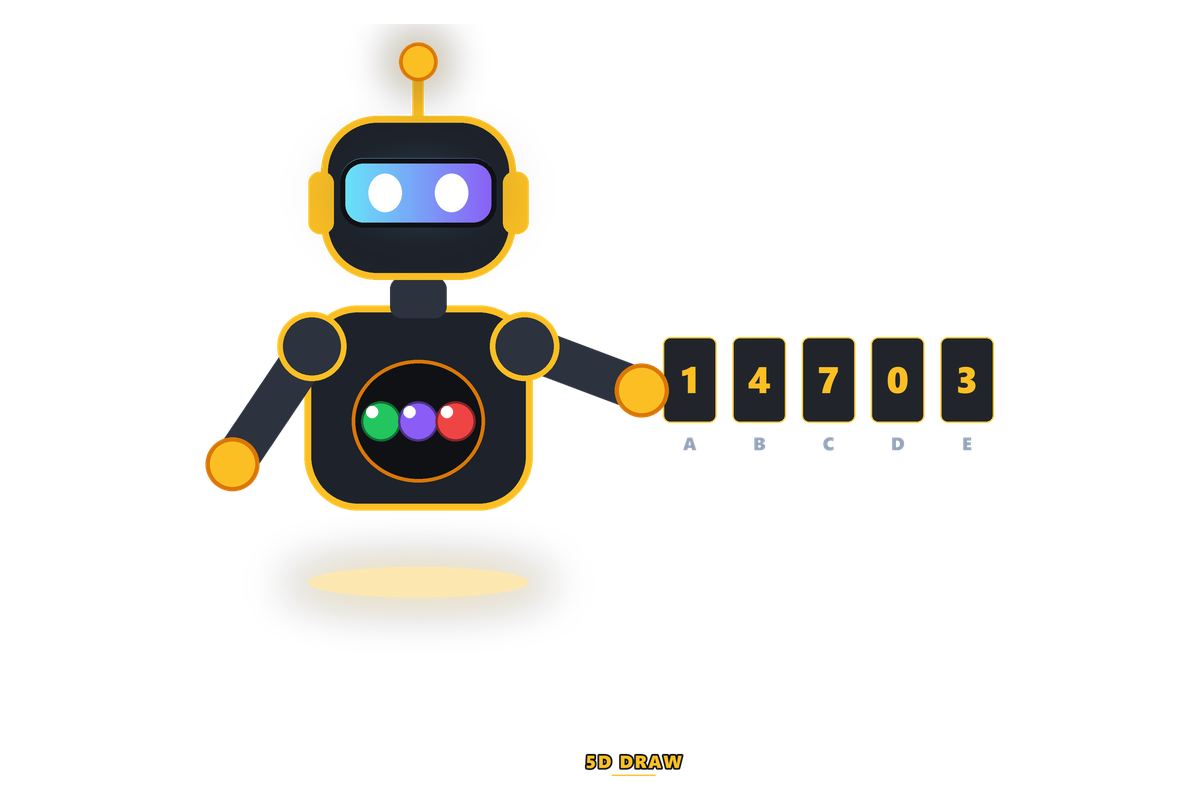
A 5D draw produces five digits at once, labelled A through E. You can bet on individual positions or on aggregate properties of the draw.
| Market | What you bet on | True probability | Typical payout |
|---|---|---|---|
| Position digit | The exact digit in position A–E | 10% | 9× |
| Position Big/Small | Whether that digit is 5–9 or 0–4 | 50% | ~1.98× |
| Position Odd/Even | Parity of that digit | 50% | ~1.98× |
| Sum Big/Small | Whether all five digits total above or below the midpoint | ~50% | ~1.98× |
| Sum Odd/Even | Parity of the total | ~50% | ~1.98× |
The extra markets create an impression of depth, but each one is still a straightforward probability with a payout trimmed below fair value. Betting a position digit at 9× on a 1-in-10 chance is the same trade as the exact-number bet in Wingo. The sum markets feel more sophisticated and are not — they are near-even-money bets on an aggregate.
K3 Dice Explained
K3 rolls three dice and settles on their combined outcome. It is the format where the odds vary most between markets, and where the payout table is most worth reading.
| Market | Combinations | True probability | Typical payout |
|---|---|---|---|
| Total = 10 or 11 | 27 each | 12.5% | ~7× |
| Total = 3 or 18 | 1 each | 0.46% | ~207× |
| Any triple (all three match) | 6 | 2.8% | ~34× |
| A specific triple | 1 | 0.46% | ~207× |
| Two dice match a chosen pair | 15 | 6.9% | ~13× |
| Total Big (11–17) / Small (4–10) | 105 each | 48.6% | ~2× |
Note the Big/Small row carefully. Triples are excluded from those markets on most implementations, which is why the probability is 48.6% rather than 50%. That excluded 2.8% is a meaningful part of the operator's margin on what looks like the safest bet on the board.
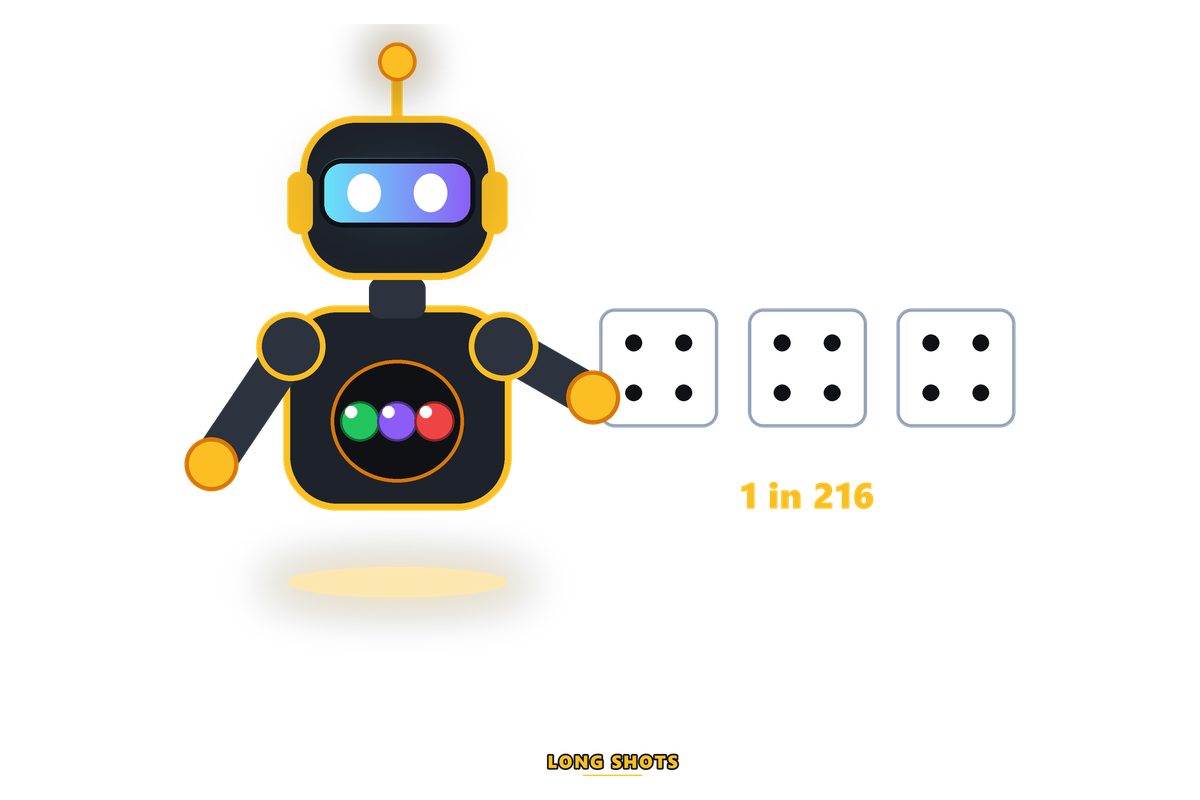
The long-shot markets — a specific triple at around 207× — are genuinely rare events paying less than fair odds (fair would be 216×). High variance, worse expectation.
Hash-Based Draws
Trx or hash-based games derive the result from a public blockchain block hash rather than a private server RNG. Because the block is public, you can verify after the fact that the number matched what the chain produced.
This is a real improvement in one specific respect: it makes result manipulation detectable. It is worth having. But it is important not to overstate it — a verifiably fair draw is still a draw with the payout set below true odds. Transparency about randomness does not change the economics, and some platforms market "provably fair" as though it means the game is favourable. It does not.
Learn the mechanics on play money first
The free demo runs the Wingo format, which underpins all of these variants. Understand how a fixed-payout draw behaves over fifty rounds before putting real money on a more complicated version of the same maths.
How Lottery Formats Compare With Wingo
| Consideration | Wingo | 5D | K3 |
|---|---|---|---|
| Learning curve | Lowest | Medium | Medium |
| Number of markets | 6 | 20+ | 15+ |
| Highest payout | 9× | 9× | ~207× |
| Variance | Moderate | Moderate | Very high on long shots |
| Easy to track your own results | Yes | Harder | Harder |
| Best for a beginner | Yes | No | No |
Our practical view: extra markets do not offer extra opportunity, they offer extra ways to lose track of what you have staked. The clearest thinking happens on the simplest board. If you are learning, stay on Wingo — and preferably on a slow table.
State Lotteries Are a Different Thing Entirely
Government lotteries in India operate under a completely different framework, and it is worth understanding the contrast:
- Legal authorisation. Run under state legislation with published rules, in states including Kerala, Nagaland, Sikkim, Punjab, Maharashtra and West Bengal.
- Scheduled draws. Fixed daily or weekly times, publicly announced — not a continuous rolling timer.
- Published results. Official gazettes and government websites.
- Accountable prize claims. A defined process with a public body behind it, including tax deduction at source on larger prizes.
- No 30-second cycle. The structural feature that makes instant games risky — the ability to play a hundred rounds in an hour — is absent.
None of this makes a state lottery a good investment; the expected return is still negative. But there is a genuine accountability difference, and the pace is far slower. Note also that lottery legality varies by state and several states prohibit lotteries entirely.
Why Long-Shot Bets Feel Different and Are Not
The instant lottery formats exist largely because they offer bigger headline multipliers than Wingo. A 207× payout is genuinely exciting in a way that 2× is not, and that excitement is the product being sold.
The arithmetic is worth doing once, properly. A specific triple in K3 pays around 207× and occurs once in 216 rolls. Betting ₹100 on it every round means staking ₹21,600 across a full cycle of outcomes, with an expected return of about ₹20,700. The ₹900 gap is the margin — and it arrives via a distribution where you lose 215 times for every win.
| Rounds without a hit | Chance of this happening | Is the next round more likely? |
|---|---|---|
| 50 | 79% | No — still 1 in 216 |
| 100 | 63% | No — still 1 in 216 |
| 216 | 37% | No — still 1 in 216 |
| 500 | 10% | No — still 1 in 216 |
| 1,000 | 1% | No — still 1 in 216 |
The middle column shows something important: going 216 rounds without hitting a 1-in-216 event is not unusual at all. It happens more than a third of the time. Players who reason that the event is "due" after a long drought are misreading exactly this, and long-shot markets punish that reasoning hardest because the drought is normal rather than exceptional.
The same logic applies to a 9× exact number in Wingo or 5D. High multipliers do not represent hidden value; they represent rare events priced slightly below their true worth. Full detail on why past results carry no information is on the Wingo prediction page.
Tracking What You Actually Staked
There is a practical problem with the multi-market formats that gets very little attention: they make your own spending genuinely hard to follow.
On a Wingo board you place one or two bets and the settlement is obvious. On a 5D board you might have stakes on three positions, a sum market and a parity market at once. Each feels small. The total is not, and because different markets settle differently on the same draw, the round can feel like a partial win while being a net loss.
- Check the total staked, not the individual chips. Most interfaces show a round total somewhere — find it before you confirm.
- Use the order history rather than the balance. A running balance hides the volume flowing through.
- Count a partial win as a loss when it is one. Winning one market out of four while staking on all four is a losing round, however it looks on screen.
- Set the loss limit in rupees, not rounds. Rounds mean different amounts on different boards.
This is the clearest practical argument for staying on the simplest board. Not because Wingo has better odds — it does not, materially — but because you can see exactly what you are doing.
More Markets Does Not Mean More Chances
Every market described on this page pays less than its true odds. Spreading stakes across many markets in one round does not reduce risk — it increases the total staked while the margin applies to every rupee. If you cannot explain exactly what a bet pays and how often it wins, that is a reason not to place it.
If play stops feeling like fun, take a break. Our responsible play guide covers spending limits, self-exclusion steps and support helplines available in India. You must be 18 or older, and online real-money gaming is restricted or banned in several Indian states — check your local rules first.
Choosing Between Tiranga Game Lottery Formats
If you are going to play something in this category, the choice of format matters less than most people assume — but it is not entirely neutral either.
The house edge across these games sits in a broadly similar band. What differs substantially is variance and clarity, and those two things determine how quickly a bankroll moves and how well you can see it happening.
| If you want… | Choose | Because |
|---|---|---|
| To understand exactly what you staked | Wingo | One digit, six markets, obvious settlement |
| The lowest variance available | Big / Small on Wingo | Near even money, roughly half the digits |
| The slowest pace | A 5-minute table | One fifth the hourly exposure of a 1-minute table |
| Verifiable results | Hash-based draws | Checkable against a public block value |
| The largest headline payout | K3 triples | ~207×, but once in 216 rolls and priced below fair |
| To spend the least | The free demo | Zero, and the mechanics are identical |
The bottom row is not a joke. Every other row costs money to explore, and the demo teaches the mechanics of fixed-payout draws completely — which is the transferable part.
Result Timing and Disputes
A practical note that applies across all these formats. Because rounds settle continuously, disputes about a specific result are common and are almost always resolved by one piece of information: the period or issue number.
- Record the period number before raising anything. Without it, support cannot locate the round.
- Screenshot the board if a settlement looks wrong, including the timer and your stake badges.
- Check the order history before assuming an error — mixed digits, the stake multiplier and excluded triples in K3 account for most apparent discrepancies.
- On hash-based games, verify the draw yourself against the published block value. That is the entire point of the format.
- Note the time as well as the period. Batch processing and time zones cause confusion in support threads.
Most disputes that reach us turn out to be one of three things: a stake multiplier left on x10, a mixed digit paying the reduced colour rate, or a K3 Big/Small bet losing to a triple that was excluded from the market. All three are documented rules rather than errors — which is exactly why reading the payout table properly is worth the ten minutes.
Independent Sources
- Lotteries in India — which states permit lotteries and under what framework.
- Expected value — how to compare a 9× payout against a 1-in-10 chance.
- BeGambleAware — independent advice and self-assessment tools.
Frequently Asked Questions
What is the Tiranga Game lottery?
The term usually refers to instant lottery-style tables sitting alongside Wingo inside prediction apps — formats such as 5D, K3 dice and hash-based draws. Some apps also market their colour prediction game itself as a lottery. Government state lotteries in India are a separate, regulated category.
How does 5D lottery work?
A 5D draw produces five digits at once, labelled A to E. You can bet on the exact digit in one position at around 9× for a 10% chance, or on aggregate properties such as whether the total is big or small, or odd or even, at close to even money.
What are the odds in K3 dice?
Three dice give 216 possible outcomes. A total of 10 or 11 has 27 combinations each, or 12.5%. Any triple occurs 2.8% of the time. Big and Small usually exclude triples, giving 48.6% rather than 50% — that excluded portion is a significant part of the operator's margin.
Is a hash-based lottery draw fairer?
It is more transparent. Deriving the result from a public blockchain hash lets players verify the number was not altered after bets closed, which is a genuine improvement. It does not change the economics — the payouts are still set below true odds.
Is a state lottery the same as an in-app lottery?
No. State lotteries operate under state legislation with scheduled draws, published results and an accountable prize claim process. In-app instant draws run continuously, often from operators with no verifiable identity and no regulator. Lottery legality also varies by state, and several states prohibit them.
Related Guides
- Wingo Game GuideThe simplest format and the best place to start.
- Color Prediction GameThe wider category, legality and safety checks.
- Free Wingo DemoLearn fixed-payout draws with play money.
- Wingo PredictionWhy no format can be predicted from past results.
- Deposit and WithdrawalGetting money out, and what usually blocks it.
- Responsible GamingLimits, warning signs and support helplines.
Conclusion
Instant lottery formats inside prediction apps are Wingo with more buttons. 5D adds positions, K3 adds dice combinations, hash draws add verifiability — but every market across all of them pays below true odds, and the extra complexity mainly makes it harder to see what you have staked.
If you want to understand these games, start with the simplest one. Read the Wingo rules, spend time on the free practice board, and only consider the more elaborate tables once you can explain exactly what each bet pays and how often it wins. That order is what the Tiranga Game homepage recommends throughout.