The Wingo gameis the most widely played color prediction format in India, and it is far simpler than the flood of "tricks" content around it suggests. One digit between 0 and 9 is drawn every round, and that single digit settles the colour markets, the Big/Small markets and the exact-number bets all at once. This guide covers every rule, every payout, the actual house edge, and the vocabulary you will meet on screen — with no prediction claims anywhere.

Wingo Game: Rules, Payouts and Round Timers Explained
What the Wingo Game Is
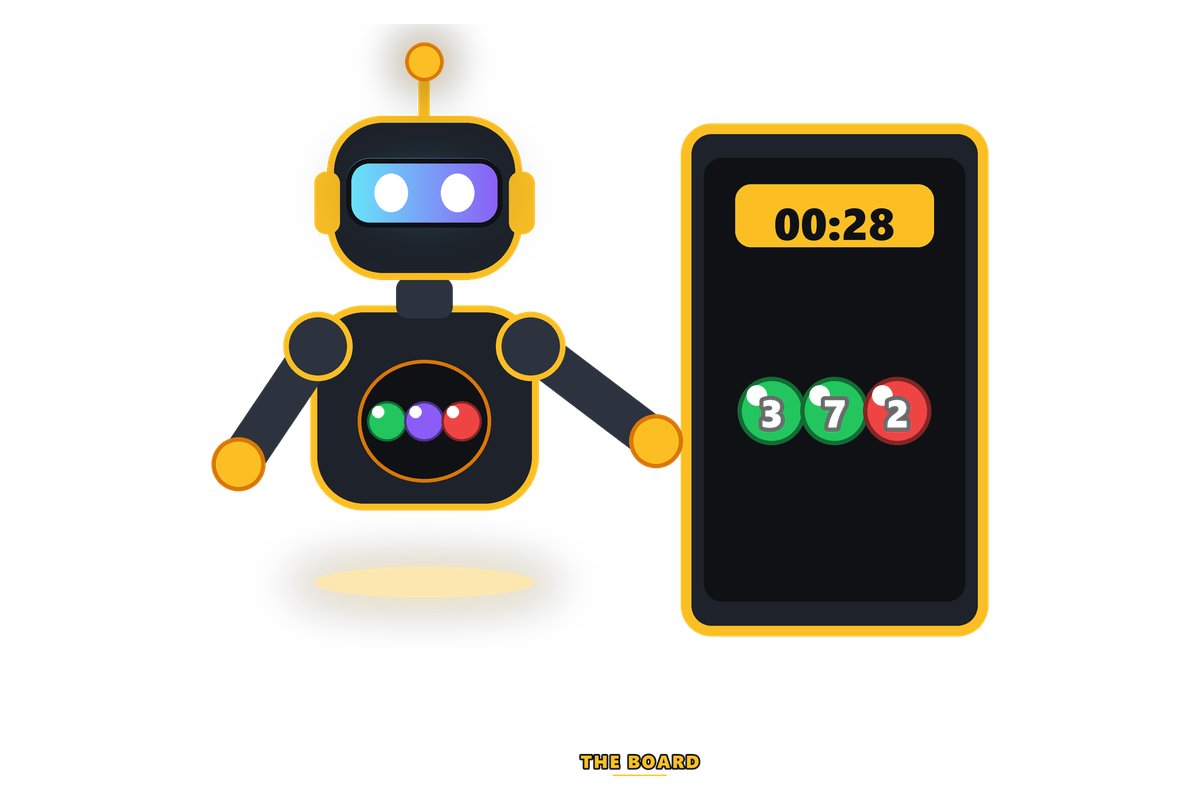
Wingo is a fast, timer-based prediction game. You are shown a countdown, you place a stake on one or more markets, betting locks for the last few seconds, and then a random digit from 0 to 9 is revealed. If your market covers that digit, you are paid at a fixed multiplier. If it does not, the stake is lost. The whole cycle takes a minute or less, which is exactly why it is so popular and exactly why it can get expensive quickly.
The name varies by platform — you will see WinGo, Win Go, Wingo Lottery and Wingo 1 Min used more or less interchangeably — but the underlying format is the same everywhere. It descends from the same family as Chinese lottery-style colour games and has been rebadged by dozens of apps aimed at Indian users. Understanding it once means understanding all of them.
One thing worth being clear about from the start: the Wingo game is not a skill game. You are not reading an opponent, managing a hand or exploiting a mistake. You are guessing the outcome of a random draw, and the payouts are set slightly below true odds so the operator profits over volume. Everything else in this guide follows from that fact.
How One Wingo Round Works
Every round follows the same four phases:
- Open phase. The timer counts down and you can place or add stakes. Each round has a unique period number, usually a long string based on the date and the round sequence.
- Lock phase. In the final few seconds the board locks. No new bets, no cancellations. This exists to stop last-millisecond betting once a result is being generated.
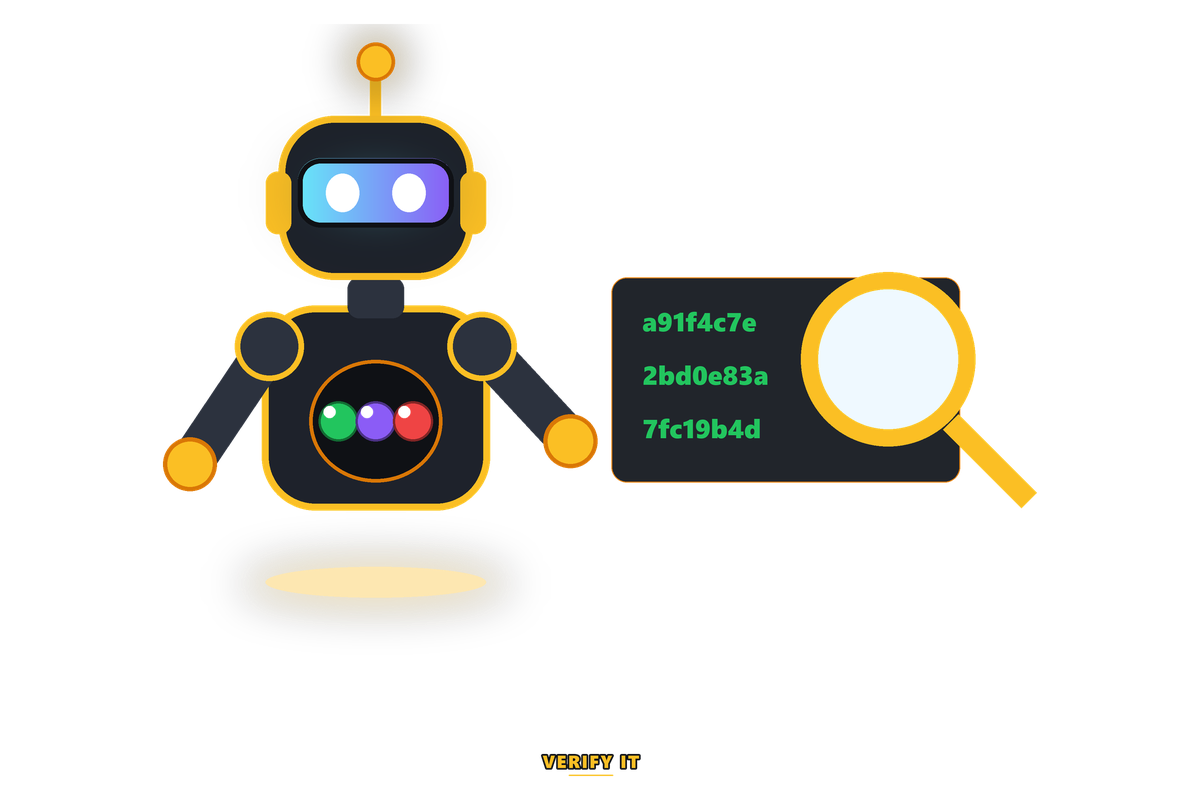
- Draw. A single digit from 0 to 9 is produced. On a fair platform this comes from a random number generator, ideally one that publishes a verifiable seed or hash so players can check the result was not changed after bets closed.
- Settlement. Every market is settled against that one digit and winnings are credited. The result joins the visible history strip, and the next period opens immediately.
That history strip is worth a comment, because it is the single most misused feature in the game. Platforms display the last several results as coloured balls, and players read streaks into them. The strip is a record, not a forecast. It has no influence on the next draw whatsoever — we go into why on the Wingo prediction page.
Markets and Payouts
There are three families of bet, and all three resolve from the same drawn digit. This is the table to memorise:
| Market | Wins on | Digits covered | Payout |
|---|---|---|---|
| Green | 1, 3, 7, 9 (and 5 at reduced rate) | 4 of 10 (+ half of 5) | 2× · 1.5× on 5 |
| Red | 2, 4, 6, 8 (and 0 at reduced rate) | 4 of 10 (+ half of 0) | 2× · 1.5× on 0 |
| Violet | 0 and 5 only | 2 of 10 | 4.5× |
| Big | 5, 6, 7, 8, 9 | 5 of 10 | 2× |
| Small | 0, 1, 2, 3, 4 | 5 of 10 | 2× |
| Exact number | One specific digit | 1 of 10 | 9× |
Digits 0 and 5 are the special cases. They are "mixed" results: 0 counts as Red and Violet, 5 counts as Green and Violet. When a mixed digit lands, the plain colour bet pays at a reduced 1.5× rather than the usual 2×, because Violet has also been paid out on the same digit. Miss this detail and your settlement maths will never reconcile.
Notice too that Green and Red are not perfectly symmetrical with Big and Small. Big and Small are clean five-digit splits. The colour markets are four clean digits plus a shared mixed digit. This is not a flaw you can exploit — it is simply how the payout ladder is constructed.
Round Timers Compared
Most platforms run several tables side by side with different round lengths. The rules and payouts are identical; only the pace changes. The pace, however, changes your exposure enormously.
| Table | Rounds per hour | Stakes/hour at ₹100 flat | Suits |
|---|---|---|---|
| Wingo 30 Sec | 120 | ₹12,000 | Experienced players who already have a hard limit |
| Wingo 1 Min | 60 | ₹6,000 | The default table and the most common starting point |
| Wingo 3 Min | 20 | ₹2,000 | Players who want time to think between rounds |
| Wingo 5 Min | 12 | ₹1,200 | Slowest pace, lowest hourly exposure |
Look at that middle column carefully. A ₹100 stake feels small. On the 30-second table, betting every round for one hour puts ₹12,000 through the game. The house edge applies to volume, not to the size of any single bet, which is why the fast tables drain bankrolls so much more efficiently than the slow ones. If you are new, the 3-minute or 5-minute table is a genuinely better place to learn.
The House Edge, Honestly
Take the Big market. It covers five digits out of ten — a true 50% chance — and pays 2× your stake. On the face of it, that sounds break-even. It is not, because platforms typically deduct a service fee of around 2% from the stake before it enters the pool. On a ₹100 bet, roughly ₹98 is actually staked. Over a large number of rounds that fee is the operator's margin, and it is the reason the game is offered at all.
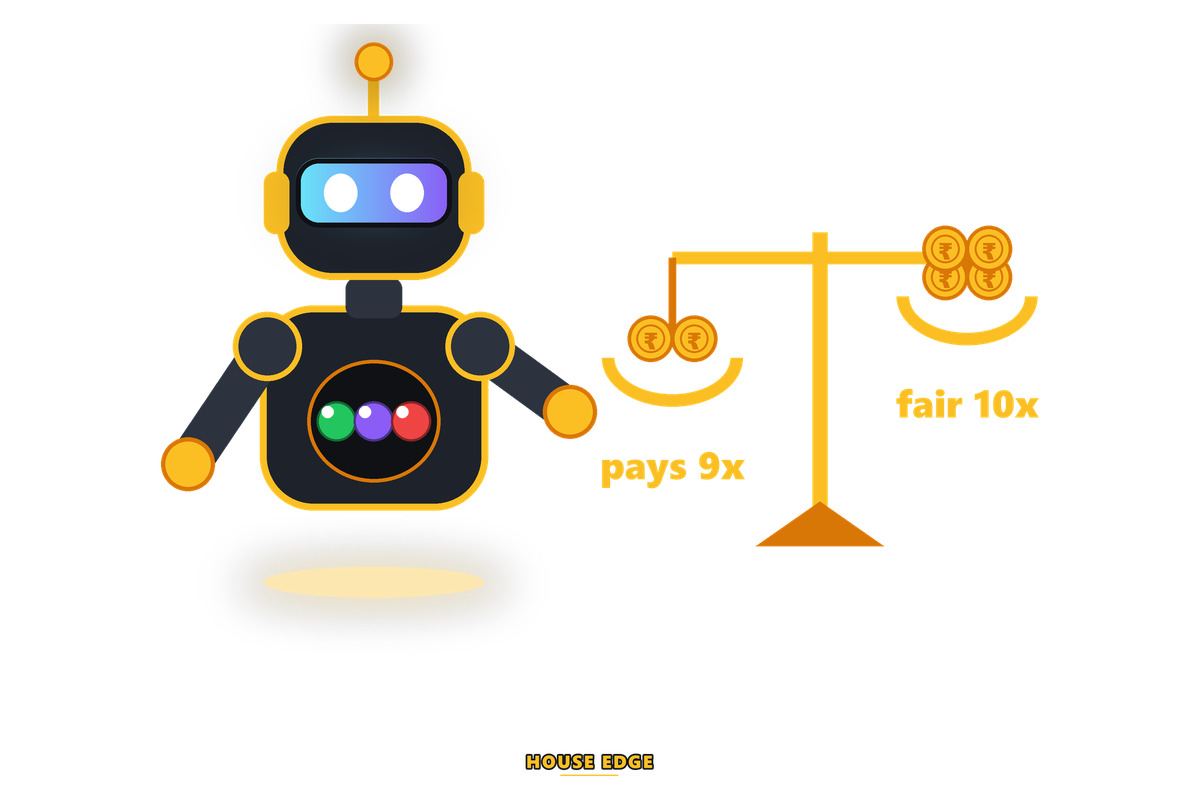
The exact-number bet makes the structure even clearer. Your chance of hitting a specific digit is 1 in 10. A fair payout would be 10×. The actual payout is 9×. The missing 1× is the edge, sitting in plain sight in the payout table.
| Bet | True probability | Fair payout | Actual payout |
|---|---|---|---|
| Exact number | 10% | 10× | 9× |
| Big or Small | 50% | 2× | 2× less ~2% fee |
| Green or Red (clean digits) | 40% + shared | ~2.2× | 2× / 1.5× mixed |
| Violet | 20% | 5× | 4.5× |
None of this is hidden or dishonest — it is how every casino-style game is built. The problem is not the edge. The problem is content that tells players the edge can be beaten with a chart. It cannot. Over enough rounds, the expected result of playing is a slow loss, and the faster the table, the faster that plays out.
Screen Vocabulary
The interfaces are usually translated from another language and the wording can be confusing. Here is what the common labels mean:
- Period — the unique ID of the current round. Quote this number if you ever raise a dispute about a settlement.
- Quantity / Multiplier (x1, x5, x10) — a stake multiplier. Selecting x10 with a ₹10 chip stakes ₹100, not ₹10. This is the single most common way beginners bet far more than they intended.
- Balance — withdrawable funds. Bonus credit is usually tracked separately and carries wagering conditions.
- Chart / Trend — a history graph of past results. Presented as an analysis tool; statistically it is decoration.
- My Bets / Order History — your own record. Check it against your balance regularly rather than trusting the running total.
Mobile Tips for Indian Players
Almost everyone plays this on a phone, often on mobile data, and a few practical things make a real difference:
- A dropped connection during the lock phase does not cancel a placed bet. It settles without you. Do not place a stake when your signal is unstable.
- The x5 and x10 multipliers sit close to the chip selector and are very easy to hit by accident on a small screen. Check the stake shown on the button before confirming.
- Turn off any auto-bet or repeat-bet feature while you are learning. It removes the deliberate pause that keeps spending visible.
- Battery saver mode can suspend a background tab mid-round on some Android builds. Keep the game in the foreground.
Try every market for free first
Our play-money Wingo demo runs the same board with simulated draws and the real payout ratios. Place Big, Small, Violet and exact-number bets and watch how the balance actually moves — without spending anything.
Common Beginner Mistakes
- Chasing a streak. Six reds in a row does not make green more likely. The draw has no memory.
- Doubling after a loss. The martingale idea feels logical and fails against table limits and finite bankrolls. A run of eight losses at ₹100 doubling needs ₹25,500 to continue.
- Missing the multiplier. Betting x10 by accident is the fastest way to lose ten times what you planned.
- Playing the 30-second table first. Twice the rounds means twice the exposure while you are still learning the buttons.
- Trusting a signal channel. Covered in detail on the prediction page — the short version is that they send opposite calls to different halves of the member list.
- Accepting a bonus without reading the wagering terms. Bonus credit frequently locks your withdrawal until a turnover multiple is met. See deposit and withdrawal.
How to Judge Whether a Wingo Game Is Fair
"Is it rigged?" is the most common question about this format, and the honest answer has two halves. A platform does not need to rig anything, because the payout structure already produces a reliable margin. But that does not mean every platform is honest, so it is worth knowing what genuine fairness looks like.
| Signal | What it means | How much weight to give it |
|---|---|---|
| Published hash or seed | Results verifiable against a public value after the draw | Strongest — you can check it yourself |
| Blockchain-derived draw | Result taken from a public block hash | Strong, for the same reason |
| Named regulator licence | An external body can act on complaints | Strong, if verified on the regulator's own site |
| Third-party RNG audit | An external lab tested the generator | Moderate — check the certificate is current |
| "Provably fair" as a slogan | A marketing claim with no method shown | None |
| Player testimonials | Screenshots and reviews | None — trivially fabricated |
The distinction that matters is between a claim you can check and a claim you must trust. A published hash lets you verify a specific round yourself. A badge saying "provably fair" with no verification method is decoration.
It is also worth separating two different worries. "The draws are manipulated" is possible but usually unnecessary from the operator's point of view. "The withdrawals do not process" is the far more common failure, and it has nothing to do with the RNG. The practical test for that one is in the deposit and withdrawal guide: deposit the minimum and withdraw it immediately, before playing.
A Short Glossary
Terms that appear across platforms, translated into plain language:
- Period / Issue number — the unique ID of a round. Quote it in any dispute about a settlement.
- Mixed digit — 0 and 5, which carry violet alongside a colour and pay the reduced 1.5× colour rate.
- House edge — the gap between true odds and the payout offered. It is how the game earns, and it applies to volume staked rather than to any single bet.
- Service fee — a small deduction, commonly around 2%, taken from the stake before it enters the pool.
- Variance — the normal short-run swing around the expected result. It is why winning sessions happen in a game with a negative expectation.
- Wagering requirement — the turnover multiple you must stake before bonus-linked funds become withdrawable.
- Trend chart — a display of past results. Presented as analysis, statistically inert.
- Lock phase — the final seconds of a round when betting closes.
Play Safely — A Quick Reminder
Prediction games are games of chance. No pattern, chart, formula or paid signal can tell you the next result, and anyone promising a sure win is not being honest with you. Treat any money you put in as money you can afford to lose, set a time and spend limit before you start, and stop for the day once you reach it.
If play stops feeling like fun, take a break. Our guide to playing within limits covers spending limits, self-exclusion steps and support helplines available in India. You must be 18 or older, and online real-money gaming is restricted or banned in several Indian states — check your local rules first.
Independent Sources Worth Reading
- Random number generation — how RNGs work and what "provably fair" should mean.
- BeGambleAware — independent advice and self-assessment tools.
- Martingale betting system — why doubling after losses breaks down mathematically.
Frequently Asked Questions
What is the Wingo game?
Wingo is a timer-based color prediction game where a single digit from 0 to 9 is drawn each round. That one digit settles the colour markets (green, red, violet), the Big and Small markets, and exact-number bets simultaneously. Rounds usually last 30 seconds to five minutes.
What do green, red and violet pay in Wingo?
Green and red normally pay 2×, and violet pays 4.5×. Digits 0 and 5 are mixed results — 0 is red plus violet and 5 is green plus violet — and on those digits the plain colour bet pays a reduced 1.5× because violet has also paid out on the same draw.
Is the Wingo game rigged?
A well-run platform uses a random number generator and some publish a verifiable hash so results can be checked after the fact. The game does not need to be rigged to profit, because the payouts are set below true odds — an exact-number bet has a 1 in 10 chance but pays 9×, not 10×. That built-in margin is how the operator earns.
Which Wingo round timer should a beginner use?
The three-minute or five-minute table. The rules and payouts are identical to the faster tables, but far fewer rounds per hour means much lower total exposure while you are still learning the interface.
Can I practise the Wingo game without depositing money?
Yes. The free demo on this site uses play money and simulated results with the same payout ratios, so you can test every market and learn the round timer without any deposit, phone number or payment details.
Related Guides
- Wingo PredictionWhy charts and streaks do not forecast the next draw.
- How to Play WingoA step-by-step walkthrough from first screen to first round.
- Wingo Color PredictionThe colour markets in detail, including the mixed 0 and 5 digits.
- Free Wingo DemoPractise every market with play money and simulated draws.
- Color Prediction GameThe wider category and how to spot an unsafe app.
- Deposit and WithdrawalUPI deposits, withdrawal delays and what actually fixes them.
Conclusion
The Wingo game rewards understanding the payout table and nothing else. One digit decides everything, the coverage of each market is fixed and public, and the difference between true odds and actual payout is the operator's margin. There is no reading of the board, no pattern to spot and no formula to buy.
If you have read this far, the most useful next step is the free play-money demo, where you can test every market described above at zero cost. When you understand exactly how the exact-number bet and the violet bet behave over fifty rounds, you will have learned more than any prediction channel could teach you. Everything else on Tiranga Game builds on that foundation.