Responsible gaming is usually reduced to a line of small print. It deserves better than that, because prediction games combine three genuinely risky features: rounds that resolve in under a minute, instant UPI deposits, and an entire content industry telling people that losses can be recovered with the right system. This page covers how to set limits that actually hold, the warning signs worth taking seriously, how to self-exclude, and where to get free confidential help.
Responsible Gaming: Limits, Warning Signs and Help
Why These Games Carry Extra Risk
Not all gambling formats are equally risky, and it is worth being specific about what makes this one difficult:
- Round speed. A 30-second round allows 120 bets an hour. Losses accumulate faster than the mind updates its sense of how much has been spent.
- Instant deposits. UPI removes every natural pause. Topping up takes seconds and happens in the same moment as the impulse.
- Small stake sizes. ₹10 feels harmless. At 120 rounds an hour it is not a ₹10 decision, it is a ₹1,200 hour.
- The prediction industry. Charts, signals and formulas actively teach players that losses are recoverable through better analysis. This is the mechanism that converts a bad session into a serious problem.
- Constant availability. A phone in your pocket, 24 hours a day, with no closing time and no one who notices you arriving.
- Near-miss design. Landing next to your number, or a colour flipping on the last digit, produces a response similar to winning while costing the same as losing.
Responsible Gaming Limits That Actually Hold
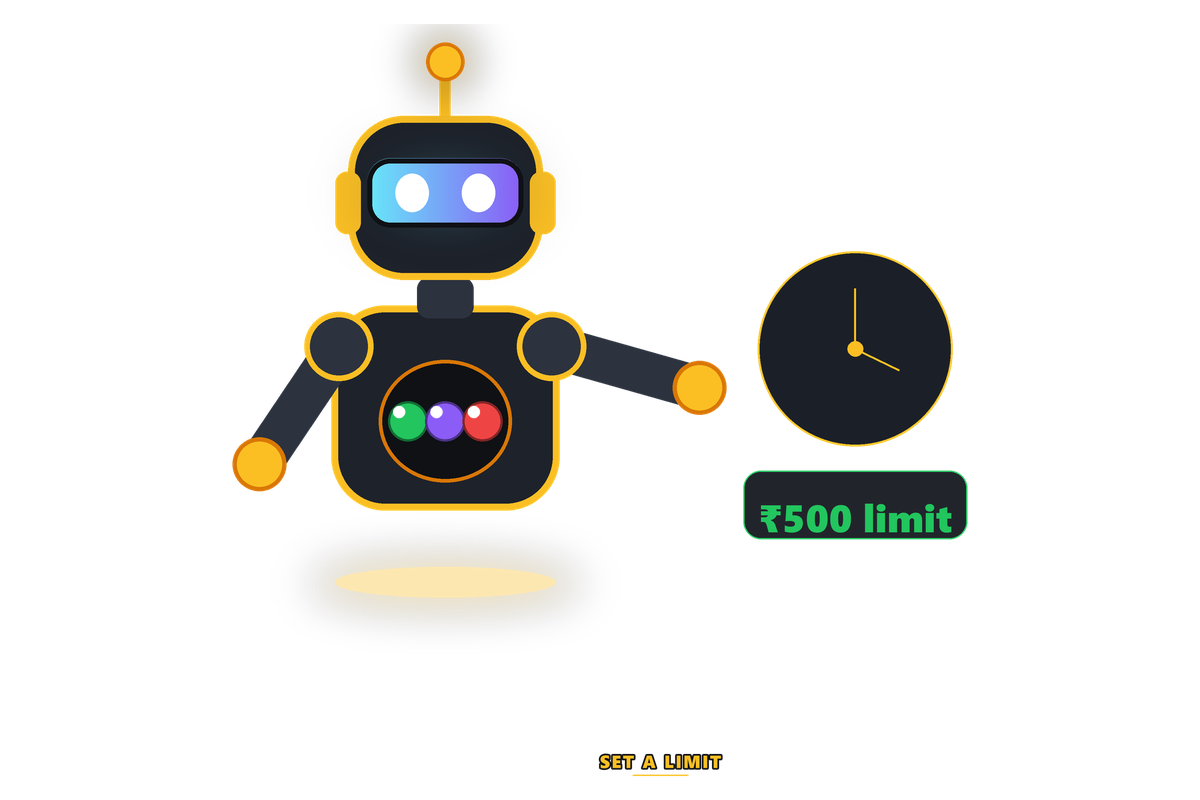
"I will be careful" is not a limit. A limit is a specific number decided in advance, when nothing is at stake, and treated as a hard boundary rather than an opening position.
| Limit | How to set it | Why it works |
|---|---|---|
| Loss limit | A rupee amount you would be genuinely unbothered to lose entirely | Removes the decision from the moment you are losing |
| Time limit | An alarm on your phone, set before you open the app | Round timers are designed to make an hour vanish |
| Deposit limit | Platform tool if available, otherwise a separate account with a fixed balance | Creates friction exactly where it is needed |
| Session frequency | Fixed days, decided in advance | Prevents daily play becoming the default |
Three rules that make limits work rather than decorate a page:
- Decide before, never during. Any limit renegotiated mid-session was not a limit.
- Stop when you hit it — winning or losing. A limit that only applies to losses is a strategy for giving back every win.
- Never deposit twice in one session. The second deposit is almost always chasing, and chasing is where the real damage happens.
Practical mechanics help more than willpower: keep a separate account with only your limit in it, remove saved cards and UPI shortcuts, and do not enable biometric payment approval for gaming apps. Friction is your friend here.
Warning Signs
These are the signals that consistently indicate play has stopped being recreational. Recognising several is worth acting on:
- Increasing stakes to recover losses — the clearest single sign.
- Playing longer than intended, repeatedly.
- Depositing more than planned, or more than once in a session.
- Borrowing money to play, or playing with money meant for bills, rent or family.
- Hiding how much you play, or lying about it.
- Paying for prediction signals or "VIP" access.
- Feeling irritable, anxious or restless when unable to play.
- Playing to escape stress, low mood or boredom rather than for enjoyment.
- Thinking about the next session while at work or with family.
- Neglecting sleep, meals, work or relationships.
- Relief rather than pleasure when you win.
One or two occasionally is common. Several, regularly, is a pattern — and it is far easier to interrupt early than after debt accumulates.
Beliefs That Cause the Most Harm
| Belief | Reality |
|---|---|
| "A colour is due after a streak" | Each draw is independent. A streak changes nothing about the next round |
| "I can win it back" | Losses are gone. Larger stakes increase the size of the outcome in both directions |
| "I'm getting better at reading it" | There is nothing to read. Experience does not change a random draw |
| "The signal channel is genuinely accurate" | Split-list trick — opposite calls to different members. See the prediction page |
| "I only lost because I broke my own system" | The system had no edge. Following it perfectly would not have helped |
| "Doubling guarantees recovery eventually" | Only with unlimited money and no table maximum. Neither exists |
The full statistical explanation behind each of these is on the Wingo prediction page. Reading it properly is genuinely protective — most harmful escalation is built on the first belief in that table.
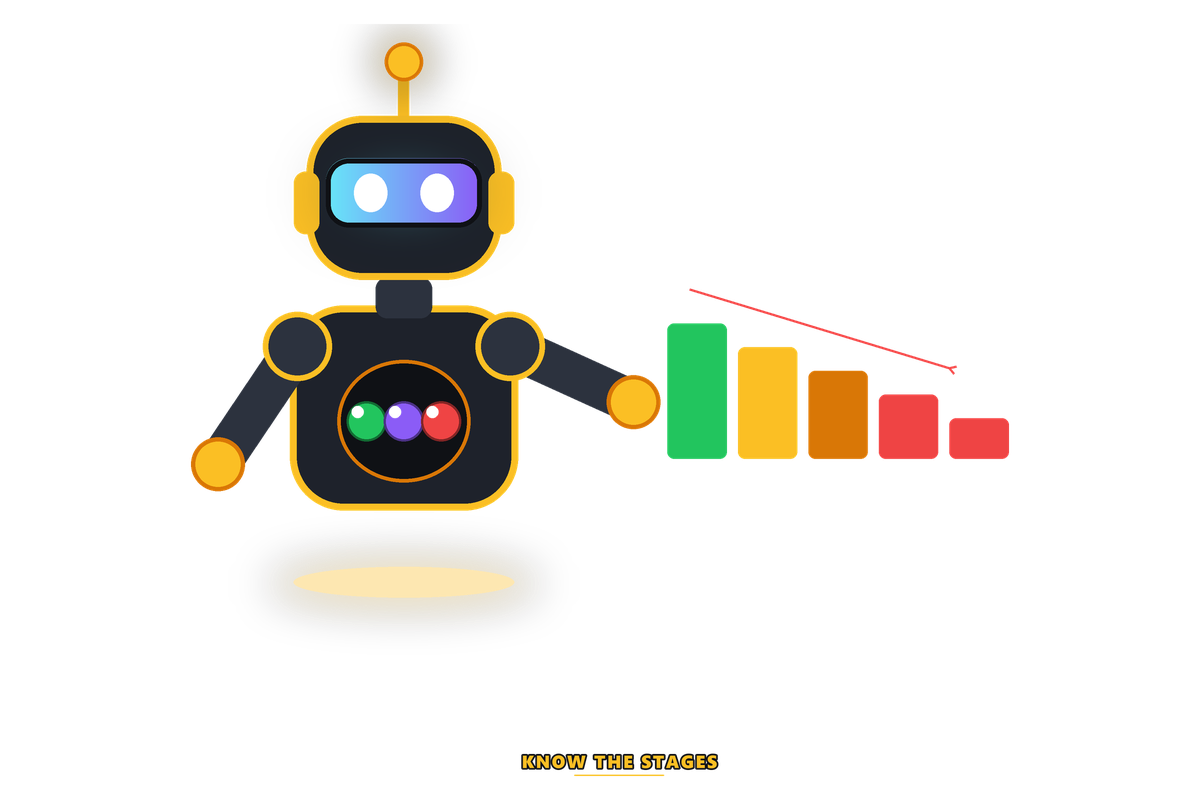
It is also worth knowing that recovery is normal rather than exceptional. Most people who reduce or stop do so without dramatic intervention — usually through a combination of blocking tools, telling one person, and putting genuine friction between the impulse and the app. Relapse is common and is not a failure; it is a normal part of changing a habit. The practical measure of progress is not a perfect record but whether the overall direction is downward over months.
Taking a Break or Self-Excluding
Escalating steps, from lightest to strongest:
- Set a cooling-off period. Many platforms offer 24 hours to 30 days, during which you cannot deposit or play.
- Use platform self-exclusion. Where offered, this locks the account for six months or longer and normally cannot be reversed early — which is precisely the point.
- Close the account entirely and request deletion of stored payment methods.
- Remove the apps and clear saved bookmarks and passwords.
- Install blocking software. Tools such as Gamban and BetBlocker (free) block thousands of gambling sites and apps across devices.
- Ask your bank to block gambling transactions. An increasing number of banks and payment apps support merchant-category blocks.
- Tell one person. Not a formal step, but consistently one of the most effective. Secrecy sustains the problem.
Where to Get Help
These services are free, confidential and independent. None of them are gaming operators or affiliates.
| Service | What it offers | Access |
|---|---|---|
| Tele-MANAS (India) | Government mental health helpline, 24×7, multiple languages | 14416 or 1800-891-4416 |
| Gambling Therapy | Free online support, groups and one-to-one help worldwide | gamblingtherapy.org |
| BeGambleAware | Advice, self-assessment tools and a live chat service | begambleaware.org |
| Gamblers Anonymous India | Peer support meetings, in person and online | gamblersanonymous.org.in |
| BetBlocker | Free blocking software for devices | betblocker.org |
| NIMHANS Bengaluru | Specialist behavioural addiction clinic | nimhans.ac.in |
If you are in crisis or having thoughts of harming yourself, contact Tele-MANAS on 14416, or go to your nearest hospital emergency department. Gambling debt feels permanent and is not; the situation is more recoverable than it appears from inside it.
A Short Self-Check
Clinicians use structured screening tools for this, and while nothing here is a diagnosis, these questions are drawn from the areas those tools examine. Answer honestly — nobody else sees the answers.
| In the last 12 months, have you… | Why it is asked |
|---|---|
| Bet more than you could really afford to lose? | The core marker of harm |
| Needed to stake larger amounts for the same excitement? | Tolerance — the pattern escalates |
| Gone back another day to win back what you lost? | Chasing — the strongest single predictor |
| Borrowed money or sold anything to get money to play? | A serious escalation point |
| Felt you might have a problem? | Self-recognition is meaningful evidence |
| Felt guilty about how you play, or what happens when you play? | Guilt usually precedes concealment |
| Had people criticise your betting, whether or not you agreed? | Others often notice earlier than you do |
| Had play cause financial problems for you or your household? | Measurable, external consequence |
| Felt stressed or anxious because of your playing? | Health impact beyond the money |
A single yes is worth noticing. Several is worth acting on. Answering yes to the borrowing question, or to the chasing question, is worth acting on today — those two mark the point where situations tend to accelerate rather than drift.
Acting on it does not have to mean anything dramatic. Installing a blocker, setting a bank merchant block, or telling one person are all small, concrete steps, and all three are more effective than deciding to be more careful.
If It Is Someone You Care About
Watching a family member or friend struggle with this is genuinely difficult, and a few things tend to help more than others:
- Choose a calm moment. Not immediately after a loss, and not during an argument about money.
- Talk about behaviour, not character."I have noticed you are playing late most nights" lands very differently from "you have a problem".
- Do not pay off gambling debts. It reliably removes the consequence without addressing the cause, and the pattern usually repeats.
- Do not police or monitor. It creates secrecy, which makes everything harder.
- Offer practical steps. Sitting with them while they install a blocker or call a helpline is more useful than advice.
- Get support yourself. Gambling Therapy and Gam-Anon both help affected family members directly.
Responsible Gaming Starts With Practical Money Steps
Before any conversation about motivation or willpower, there are structural steps that reduce harm immediately. These work because they do not depend on how you feel in the moment:
- Separate the money. Keep gaming money in an account that holds nothing else and has no overdraft. When it is empty, the session ends by default rather than by decision.
- Remove stored payment methods. Delete saved cards and UPI shortcuts from every gaming app. Re-entering details manually adds ninety seconds, and ninety seconds is often enough.
- Turn off biometric approval for payments in these apps. A fingerprint makes depositing effortless, which is exactly the problem.
- Ask your bank for a gambling merchant block. A growing number of banks and payment apps support this, and many apply a cooling-off period before it can be lifted.
- Never borrow. Not from a person, an app, a credit card or a buy-now-pay-later service. Borrowed money is the point at which a difficult situation becomes a serious one.
- Deal with debt separately from gambling. Attempting to gamble your way out of a gambling debt is the most reliably destructive decision in this entire area.
Notice that none of these require you to want to stop. They work by making the harmful action slower and the harmless one easier, which is a far more dependable mechanism than resolve.
How a Problem Usually Develops
Harm rarely arrives suddenly. It follows a recognisable path, and being able to name your own position on it makes stepping off considerably easier.
| Stage | What it looks like | What helps at this point |
|---|---|---|
| Curiosity | Small stakes, occasional play, easy to stop | Keep limits, stay on slow tables |
| A notable win | Stakes rise; the win feels like evidence of skill | Recognise variance — see the demo page |
| Chasing | Bigger bets to recover a loss; sessions run long | Hard stop. This is the pivotal stage |
| Hiding | Play concealed; borrowing begins | Tell one person. Secrecy sustains the problem |
| Crisis | Debt, missed bills, relationship strain | Helpline, self-exclusion, blocking software |
The third row is where nearly everything is decided. Chasing is the behaviour that turns a bad evening into a pattern, and it is exactly what the prediction industry teaches — charts and signals exist to persuade you that losses are recoverable through better analysis. They are not. The prediction page explains why in full, and reading it properly is one of the more protective things you can do.
Independent Resources
- BeGambleAware — advice, live chat and a free self-assessment tool.
- Gambling Therapy — free multilingual online support worldwide.
- BetBlocker — free device-level blocking software.
- Tele-MANAS — India's 24×7 government mental health helpline.
- Problem gambling — clinical background and recognised criteria.
Frequently Asked Questions
How do I set a gambling limit that I will actually keep?
Decide a specific rupee amount and a specific time before you open the app, never during a session. Set a phone alarm for the time limit, use the platform's deposit limit tool if it has one, and stop when you reach either — whether you are winning or losing. A limit renegotiated mid-session was never a limit.
What are the warning signs of a gambling problem?
The clearest single sign is increasing stakes to recover losses. Others include playing longer than intended, depositing more than once in a session, borrowing money to play, hiding how much you play, paying for prediction signals, feeling restless when unable to play, and playing to escape stress rather than for enjoyment.
How do I self-exclude from a gaming platform?
Start with a cooling-off period if the platform offers one, then formal self-exclusion which typically locks the account for six months or more and cannot be reversed early. Beyond that, close the account, remove the apps, install free blocking software such as BetBlocker, and ask your bank to block gambling merchant categories.
Where can I get free help for gambling in India?
Tele-MANAS is a free government mental health helpline on 14416, available 24×7 in multiple languages. Gambling Therapy and BeGambleAware offer free confidential online support, Gamblers Anonymous India runs peer support meetings, and NIMHANS in Bengaluru has a specialist behavioural addiction clinic.
Should I pay off a family member's gambling debt?
Generally no. Paying the debt removes the consequence without addressing the cause, and the pattern usually repeats with a larger amount. More useful is helping them install blocking software, contact a helpline, or attend a support meeting — and getting support for yourself through a service such as Gam-Anon.
Related Guides
- Wingo PredictionThe statistics behind the beliefs that cause the most harm.
- Free Wingo DemoPlay money only — no deposits and nothing at stake.
- Deposit and WithdrawalDeposit limits and why the second deposit is the risky one.
- Wingo Game GuideRound timers and how pace changes your exposure.
- Color Prediction GameLegality in India and how to spot an unsafe platform.
- Contact UsGet in touch about anything on this site.
Conclusion
Responsible gaming is not a disclaimer, it is a set of decisions made before you start: a number, a clock, and a willingness to stop at both. The features that make prediction games engaging — speed, instant deposits, constant availability — are the same features that make them risky, and no amount of experience changes the underlying odds.
If any of the warning signs above sound familiar, the helplines in this page are free, confidential and staffed by people who will not judge you. And if you simply want to understand the games without anything at stake, the play-money demo on our Tiranga Game guides uses play money only — which remains the safest way to learn anything about this category.